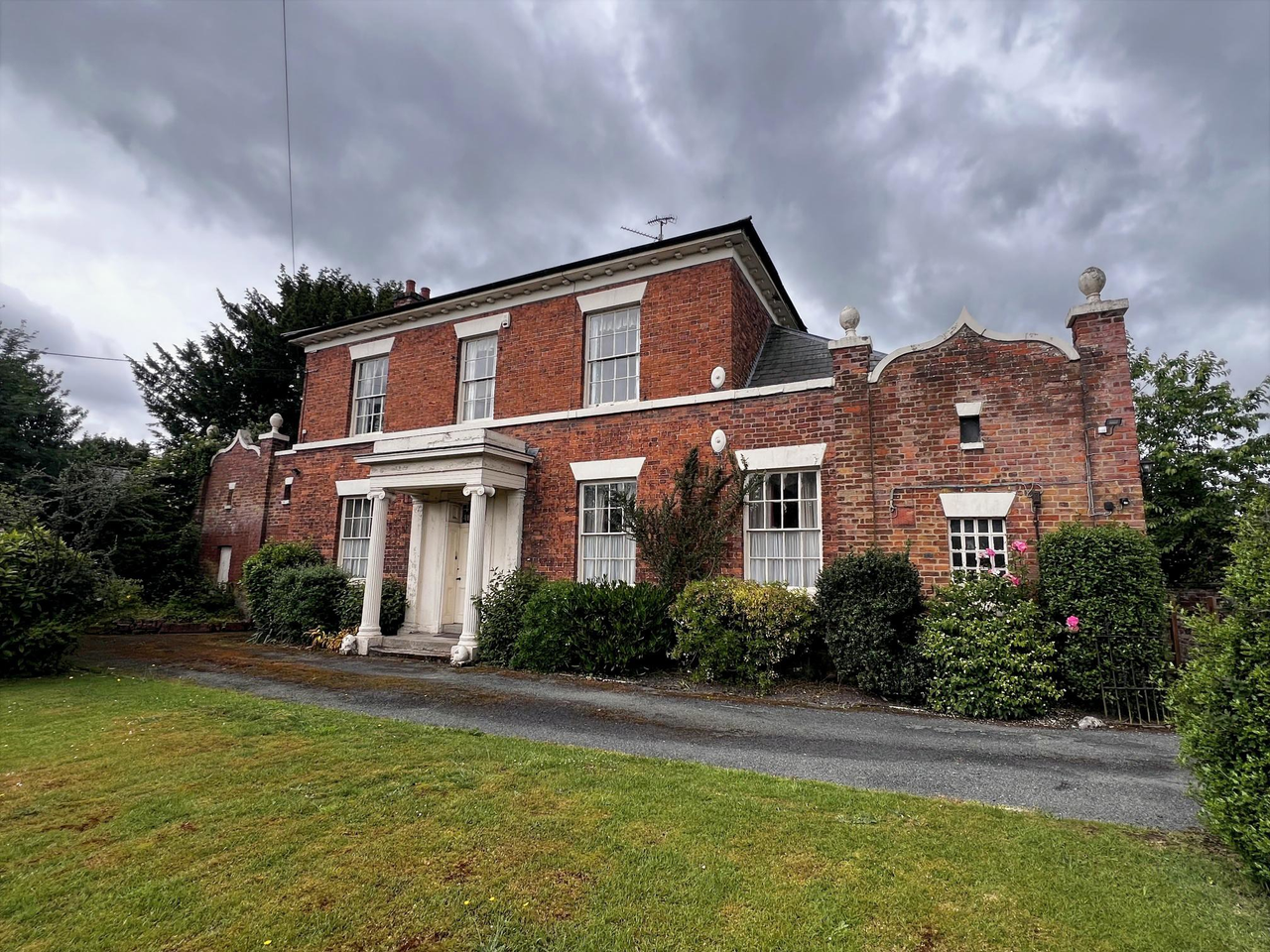
A Significant Shropshire Manor House
Traditional buildings rarely reveal their full story at first glance. This substantial Shropshire manor house highlights the importance of understanding historic construction, change over time and the wider estate landscape in which buildings sit. Traditional buildings come in many forms. While much of our work is undertaken in Wales, we are occasionally fortunate to be involved with significant properties elsewhere in the Border Counties.
This substantial red brick manor house in Shropshire is a good example. Buildings of this type often reflect centuries of change, with successive generations adapting and altering them to suit changing needs. What may appear straightforward at first glance can reveal a fascinating history of construction, repair and development over time.
One of the most rewarding aspects of our work is the opportunity to study and understand these buildings properly. Every traditional building is different. Construction methods, materials and alterations vary considerably, not only between regions but often between neighbouring properties. Traditional buildings are often grouped together, but in reality they can differ enormously. A red brick Shropshire manor house presents a very different set of considerations to a Welsh stone farmhouse or a timber-framed cottage. Understanding regional construction methods, historic materials and patterns of alteration is an important part of interpreting how a building has developed over time.
Many of the traditional buildings we encounter do not exist in isolation. Estate houses, farm complexes and associated structures often form part of a wider historic landscape, where understanding relationships between buildings can be just as important as understanding the fabric of any single property. In this case, the house formed part of a wider historic estate, adding another layer of interest to the survey process.
Over the years we have been fortunate to work with a wide range of traditional buildings, from modest rural cottages and farmhouses to churches, estate buildings and substantial country houses. While the buildings themselves may differ considerably, the principles of careful observation and understanding remain the same.
A survey is rarely about identifying a single defect. More often it is about understanding how a building works as a whole and how its history continues to influence its performance today. The most interesting buildings are often those that reveal their story gradually, with each phase of development contributing to the character seen today.
It was a pleasure to have the opportunity to survey another significant red brick Shropshire property and to explore the many layers of history contained within its walls.
Traditional buildings continue to attract owners because they offer something increasingly rare: individuality, craftsmanship and a strong connection to place. While no two buildings are ever quite the same, the process of understanding them remains as rewarding as ever.
If you are considering the purchase of a traditional property, understanding how a building has evolved over time can often be just as important as understanding its current condition. Whether a modest cottage, farmhouse, mill or country house, every building has a story to tell.
https://dyfiarchitecture.co.uk/listed-building-surveys/ https://dyfiarchitecture.co.uk/traditional-building-surveys-wales/
Get in touch
Have a project in mind? Send us a message and we'll get back to you.
Message sent
Dyfi Architecture is a multi-award winning practice